The High-Stakes Screen: How Gaming Odds Are Taking Over Your Live Stream
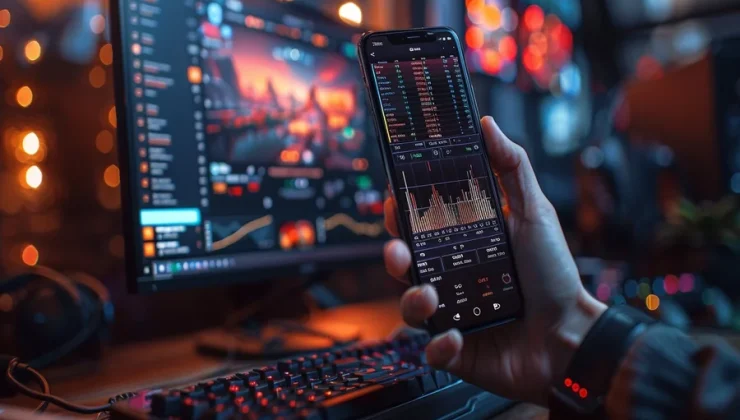
It used to be a taboo subject, whispered about in back alleys. Now, the odds are overlaid on the screen in neon green. Welcome to the era of the “Gamified” broadcast.
Watch a sports broadcast from ten years ago, and it looks remarkably clean. It’s just the game. Watch one today, and it looks like the cockpit of a spaceship. Tickers are scrolling, probability percentages are fluctuating, and “live odds” are flashing in the corner.
Sports broadcasting has married the betting industry, and the honeymoon phase is intense. This convergence has fundamentally changed how we watch. We aren’t just cheering for a team anymore; we are cheering for the “Over/Under” and the “Next Goalscorer.” This article unpacks how the integration of real-time gambling data is transforming the passive viewer into an active, adrenaline-fueled participant.
The Shift from “Who Wins?” to “What Happens Next?”
Traditional betting was binary: Win or Lose. Modern “Micro-betting” is granular. You can bet on whether the next pitch will be a strike. You can bet on who will take the next corner kick.
This shift requires a new kind of broadcast technology. The video feed and the data feed must be perfectly synchronized. If the odds update before the video shows the foul, the experience is broken. Broadcasters are deploying ultra-low latency feeds specifically to cater to this market. It turns every second of the match into a potential jackpot, keeping viewers glued to the screen during blowouts. Even if the score is 4-0, you might still be watching to see if the star striker gets one more shot on target.
The Adrenaline Economy
This integration creates a heightened emotional state. It’s not just fandom; it’s financial investment. The “sweat” (the anxiety of watching a bet play out) is a powerful retention tool.
However, “sweating” a bet requires a reliable environment. You can’t afford for your stream to freeze when you have money riding on a penalty kick. Serious bettors act like day traders; they optimize their setups for speed and stability. They gravitate toward platforms that promise zero downtime. In the community of high-stakes viewers, hubs like TALONCHILL.COM represent a necessary utility. The name implies a relaxed state, but the function is serious: providing a stable, glitch-free pipeline to the action so the viewer can “chill” knowing their connection won’t fail at the critical moment.
The Second Screen is Now the First Screen
For the betting generation, the phone is the primary device. The TV is just the scoreboard. Streaming apps are evolving to merge these two worlds. We are seeing “Watch & Bet” interfaces where the video plays in the top half of the mobile screen, and the betting slip lives in the bottom half.
This UI change is profound. It removes the friction of switching apps. It collapses the funnel between “I think he’s going to score” and “I bet he’s going to score” to a single tap.
The Global Search for the Edge
Bettors are always looking for an edge. Sometimes that edge is information; sometimes, it’s access. In the world of international football (soccer), the markets are 24/7. A bettor might be tracking a game in the Brazilian Serie A at 3 AM.
Finding reliable streams for these non-mainstream matches is a constant challenge. The surge in search traffic for terms like 해외축구 무료중계 (free overseas soccer broadcasting) is often driven by this demographic. They are not just casual fans; they are researchers. They need visual confirmation of the game state—the weather, the players’ body language, the referee’s strictness—before placing their live bets. They use these aggregation platforms as their eyes and ears on the ground, essential tools in their handicapping arsenal.
The Ethical Tightrope
Of course, this saturation of gambling has a dark side. Critics argue that we are normalizing addiction, turning sports into a casino for children. The constant bombardment of odds can be overwhelming for those just wanting to watch the game.
Broadcasters are walking a tightrope. They need to serve the betting audience (which is highly profitable) without alienating the traditional family audience. This is leading to “segmented feeds,” where you can choose a “Betting Mode” stream or a “Family Mode” stream.
The Future is Algorithmic
We are moving toward a future where the broadcast bets for you. Imagine an AI that knows your betting history and says, “You usually bet on Harry Kane to score. The odds are good right now. Want to place $5?”
It sounds dystopian to some, and convenient to others. But one thing is certain: the days of separating the game from the gamble are over. The modern sports stream is a high-speed data terminal, and we are all traders on the floor of the arena.