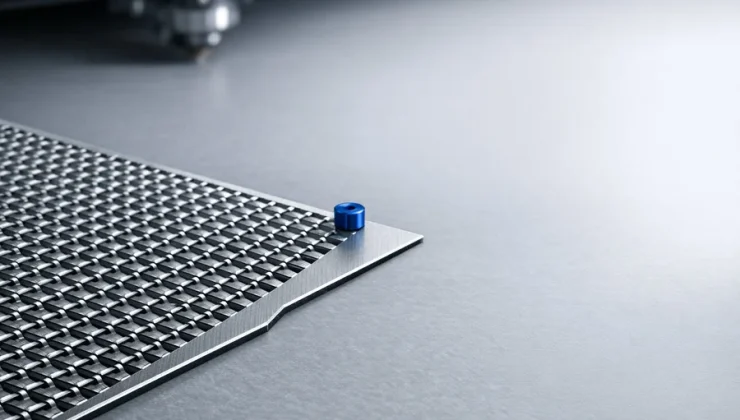
OEMs seeking greater control, customization, and efficiency in their supply chains increasingly bring key operations under one roof. This article explores the specific operational, quality and strategic advantages of in-sourcing these processes for engineers and OEM buyers focused on industrial applications, including industrial wire mesh.Outsourcing wire mesh production can lead to longer lead times, fluctuating quality and less flexibility. By investing in internal
wire mesh fabrication capabilities, OEMs gain direct oversight of every stage, from selecting materials to final assembly. This approach enables rapid prototyping, real-time adjustments and closer alignment with evolving project requirements, all critical factors when manufacturing components with demanding tolerance and performance standards for industrial wire mesh.
The integration of laser-based cutting technologies further enhances in-house operations. By controlling both forming and cutting, OEMs can achieve tighter tolerances, better repeatability and seamless adaptation between design revisions. This level of control becomes especially valuable when responding to urgent customer needs, producing small-volume batches or ensuring consistent results for large-scale programs that rely on custom wire cloth.
Enhanced Control Over Quality and Tolerances
One of the most significant benefits of in-house capability is the ability to enforce strict quality protocols. OEM teams can set, monitor and adjust tolerances for wire diameter, mesh count and opening size directly on the shop floor, leading to superior repeatability and reduced risk of nonconformance. This oversight helps avoid the fitment issues and costly reworking that often result from unchecked tolerance drift seen in outsourced supply tied to wire cloth manufacturer schedules.
Having direct quality control ensures every custom wire cloth and industrial wire mesh component meets unique functional and regulatory standards. Immediate access to tools and inspection equipment allows for in-process verification, minimizing the chance for defects and reinforcing confidence in critical applications from filtration to structural support.
Reduced Lead Times and Improved Project Agility
Managing fabrication internally can dramatically shorten the time from design to delivery. Without dependencies on third-party schedules or shipping logistics, OEMs can rapidly pivot production priorities in response to shifting customer demands or unexpected technical challenges. This flexibility supports faster iterations on prototypes and expedites urgent production runs, especially when wire mesh fabrication is coordinated directly with engineering.
Embedding cutting operations alongside forming further streamlines production by minimizing setup and transition times between stages. The seamless integration improves coordination across departments, reducing bottlenecks and keeping multidisciplinary manufacturing teams working in sync, key for OEMs operating within just-in-time or lean environments while expanding laser cut wire mesh capacity.
Greater Customization and Responsiveness
In-house capability offers OEMs unparalleled opportunities to customize wire mesh and wire cloth products. From non-standard geometries to proprietary edge finishes, engineering teams can prototype and iterate designs quickly without waiting on external suppliers. This level of responsiveness is essential for projects that involve unique requirements or rapidly changing regulatory landscapes, including programs built around industrial wire mesh.
With laser cut wire mesh capabilities, OEMs unlock highly precise cuts and complex patterns, expanding the range of feasible solutions. The ability to experiment and refine these features internally not only enhances innovation but also supports the immediate verification of new approaches before scaling into full production of custom wire cloth.
Cost Efficiency and Long-Term Value
While initial investment in fabrication and laser cutting infrastructure can be substantial, many OEMs find that long-term cost savings outweigh setup expenses. In-house control over materials, scheduling and labor reduces waste, scrap and the hidden costs of unforeseen delays or quality failures. Procurement teams retain the option to source raw wire mesh materials cost-effectively, focusing external partnerships only where true specialization is required, rather than defaulting to a wire cloth manufacturer for routine work.
Partnering less frequently with outside producers for routine requirements means that when specialized expertise or certification is needed, resources can be allocated to the most strategic projects. Over time, the cumulative impact of reduced lead times, minimized product recalls and enhanced customer satisfaction strengthens the OEM’s competitive position, while internal teams standardize repeatable methods for laser cut wire mesh.
Strategic Benefits for OEMs
By embracing in-house capability and advanced cutting methods, OEMs position themselves for greater agility, superior quality control and more tailored solutions for their customers. These advantages, enhanced oversight, faster lead times, higher customization and lower long-term costs, translate to stronger project outcomes and a more resilient supply chain. For engineers and OEM buyers, developing these internal processes reduces dependency on any single wire cloth manufacturer and supports disciplined, scalable wire mesh fabrication across product lines.