
How to Build an NFT Marketplace: A Complete Guide for 2025
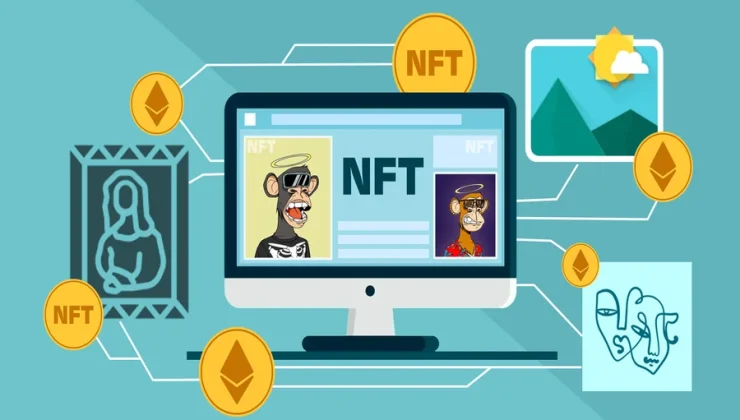
Non-fungible tokens (NFTs) have swept into digital art, gaming, fashion, media, and even real estate, pushing demand for places where creators and collectors can meet. As trading volumes and brand participation grow, purpose-built marketplaces remain one of the most direct ways to capture value from this momentum.
The rise of NFT market development reflects this shift, combining blockchain technology, smart contracts, and creative communities into sustainable digital economies.
The development process
1. Ideation & market research
Every marketplace starts with a sharp concept and audience insight. Define who you’re building for and what value existing platforms miss: whether it’s better curation, smoother onboarding, or fairer royalties. Study competitors’ models and user journeys, then test your idea through small prototypes and interviews. Clear goals and measurable success metrics at this stage ensure your platform grows around real demand, not speculation.
2. UX/UI & content architecture
A successful marketplace feels simple, intuitive, and visually consistent, guiding users from wallet connection to purchase with minimal friction. Focus on clarity: show rarity, ownership, and pricing data without clutter. Organize content with thoughtful categories, filters, and discovery feeds. A polished interface makes minting, selling, and browsing feel effortless for both creators and collectors.
3. Technical architecture & smart contracts
Choose the blockchain that best fits your goals: Ethereum or Layer 2s for liquidity, Solana or Tezos for efficiency. Develop smart contracts for minting, trading, and royalties, and audit them carefully to prevent exploits. Combine decentralized storage like IPFS with fast indexing, and integrate wallets or fiat gateways to reach broader audiences.
4. Testing, audit readiness & deployment
Before going live, test everything as if under real-world stress. Simulate trades, drops, and bids to catch edge cases early. Run security audits and beta trials with creators to refine usability. Once confident, deploy gradually while monitoring stability and performance. A careful rollout protects users and strengthens long-term credibility.
5. Post-launch growth, ops & roadmap
After launch, focus on data-driven iteration and community care. Track creator retention, trading volume, and user satisfaction to guide updates. Add new features like multi-chain support or social discovery to boost engagement. Maintain strong moderation and fraud prevention to preserve trust. With consistent improvements and transparent communication, your marketplace can grow into a lasting ecosystem.
Choosing the right blockchain for your marketplace
Selecting the right blockchain is one of the most strategic decisions in NFT marketplace development. It shapes performance, costs, user experience, and even brand perception. Each ecosystem offers different trade-offs in speed, fees, tooling, and community maturity.
- Ethereum – The largest and most liquid NFT ecosystem, supporting ERC-721 and ERC-1155 standards and all major wallets. It connects to nearly every aggregator but suffers from high gas fees and congestion. Many teams now use Layer 2s like Arbitrum, Optimism, or Base to keep Ethereum’s security while cutting costs.
- Layer 2 and rollups (Arbitrum, Optimism, Base, zkSync) – Built on Ethereum, they deliver faster, cheaper transactions while inheriting mainnet security. Ideal for marketplaces with frequent or low-value trades. Bridges still add some UX friction, though zk-rollups promise near-instant settlement and strong privacy.
- Solana – A high-throughput, low-fee network favored by gaming and collectibles projects. Its proof-of-history design enables quick confirmations, and tools like Metaplex streamline minting. Occasional outages and centralization remain minor concerns, but UX via wallets like Phantom is excellent.
- Flow – Created by Dapper Labs for digital collectibles such as NBA Top Shot. It offers smooth onboarding, integrated KYC, and energy efficiency, though it’s less flexible than EVM-compatible networks.
- Tezos – Energy-efficient and community-governed, Tezos uses the FA2 token standard and is popular among digital artists (Objkt, fxhash). Minimal fees and self-amending upgrades make it a stable, sustainable choice.
Ultimately, your blockchain choice defines the DNA of your marketplace, affecting scalability, trust, and the type of community you attract.
Closing thoughts
Winning marketplaces don’t just list tokens – they manufacture trust, liquidity, and taste. Start with a sharp niche, ship a seamless creator and collector journey, prove liquidity, then scale features and chains deliberately. If you get discovery, royalties, and auctions right, the rest becomes an exercise in disciplined iteration.