
How Finance Teams Get Accuracy and Efficiency with AI Document Processing for Expense Automation
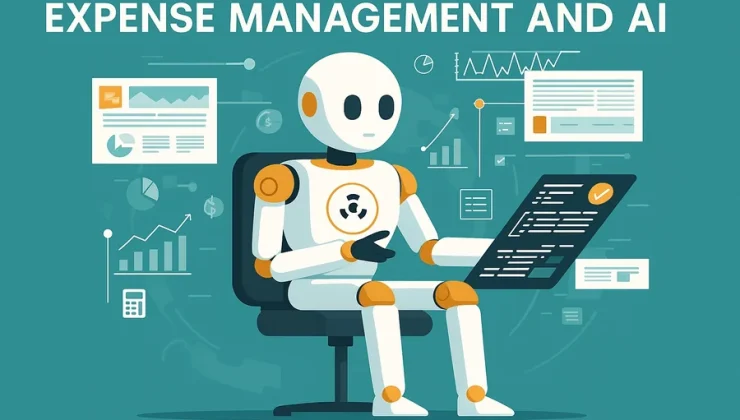
“How do large corporations manage thousands of bills, invoices, and receipts without a single error?” Imagine a few dozen finance personnel huddled with stacks of papers, trying to confirm every single figure. Pretty tiresome, isn’t it? Now, this is where technology had to be a savior.
Given the rapid pace of business analysts, document processing has become a great asset for any finance team. It helps them manage data fast, accurately, and efficiently. With expense automation, minimising errors, saving time, and strategising are the only things that businesses can now divert their attention to, rather than toward paperwork.
Let us see this one by one in simple terms.
The Old Way of Managing Expenses
Before we proceed with AI, let’s discuss how finance teams used to work.
Suppose you are a finance officer in an organization. Workers submit their receipts for travel, meals, or office expenses every week. You have to:
- Gather all the receipts.
- Carefully read every one.
- Input the information into a spreadsheet.
- Compare it with the company rules.
- Approve or deny them.
This is a time-consuming, stressful, and human-error-prone process. One incorrect number can cause huge issues during audits or tax submission
Financial teams have always been struggling with providing accurate reports. But when they do all this manually, errors occur. And correcting errors takes more time as well.
What Is AI Document Processing?
Finally, let us meet the hero of our tale: AI document processing.
AI document processing is an intelligent technology that employs Artificial Intelligence (AI) to scan, comprehend, and extract data from documents. Rather than a human typing out information from invoices or receipts, the AI application does it for them.
For instance, when a worker submits a lunch receipt, the AI can:
- Scan the vendor’s name.
- Recognize the purchase date.
- Pull out the total value.
- Put the data into the appropriate category (such as “Food” or “Travel”).
- The cherry on top? It does all this in mere seconds without fatigue.
Expense Management Automation – The Ideal Ally
AI document processing is even more effective when paired with expense management automation.
Expense management automation refers to the automation of the tracking, approval, and recording of expenses using software. It’s equivalent to a digital assistant that handles the entire expense process from initiation to completion.
When these two technologies combine, they are a seamless system whereby:
- Staff upload invoices or receipts.
- AI document processing draws out and verifies the information.
- Expense management automation cross-checks against company rules.
The reports are given in real-time.
This translates to no more piles of paper, no more typing out by hand, and no more checking for hours on end.
Why Finance Teams Love AI Document Processing
So, why are finance teams across the globe embracing AI document processing and expense automation? Let’s examine the advantages in simple terms.
- Accuracy You Can Trust
Humans can err, particularly when they are fatigued or dealing with hundreds of receipts. AI, however, can scan data with close-to-perfect accuracy. This minimises the chances of incorrect numbers, omissions of data, or duplication.
- Faster Processing
A function that took hours can be completed in minutes. Financial teams can close books quickly and deliver reports to management on time.
- Cost Savings
Less human intervention means less resources wasted on repetitive tasks. Organizations can save on costs by eliminating errors and penalties resulting from inaccurate expense reports.
- Happy Employees
Nobody likes to fill out lengthy expense reports. With automation, the employee just snaps a photo of their receipt and uploads it. The system takes care of everything. Time is saved, frustration eliminated.
- Improved Compliance
Expense management automation ensures that all expenses adhere to company policies. If somebody submits a claim that is not approved, the system alerts it at once. This keeps companies safe from audits.
- Scalability
When companies expand, the number of receipts and invoices increases. It is easy for AI systems to handle large data sets without additional manpower.
A Simple Example
Let us consider a simple illustration of a sales team member, Ananya.
- Ananya travels for business.
- She makes payments for travel, dining, and accommodations.
- She used to keep all her paper receipts, complete a lengthy form, and forward it to the finance department.
Now, with AI document processing and automated expense management:
- She snaps pictures of her receipts on her mobile app.
- AI reads it out instantly.
- The expense management system cross-references it with the company’s travel policy.
- Ananya’s expenses get approved instantly and reimbursed within days.
No paperwork. No delay. Just seamless and swift processing.
How Finance Leaders View the Shift
Finance executives aren’t only pleased to save money and time. They are also thrilled about the insights that AI provides.
AI document processing has the ability to create real-time reports that reveal:
- Which department is spending the most.
- What kinds of expenses are going up.
- Where the company can reduce expenses.
This information enables leaders to make wiser budgeting and financial planning decisions. It transforms finance from a mere “record-keeping department” to a “strategic partner” for growth. Organizations focusing on accuracy and compliance, such as those handling corporate tax accounting in Ottawa through Ottawa Taxes, can benefit immensely from these AI-powered insights to streamline tax preparation and financial reporting.
Challenges and How to Overcome Them
Certainly, no technology is flawless. Finance departments can experience some setbacks when moving to AI document processing and auto-expense management automation.
Adoption Resistance – Staff might be reluctant to use new software.
Solution: Offer training and demonstrate how easy and useful the system is.
Integration Problems – Businesses might already have various finance software running.
Solution: Opt for AI tools that integrate easily with current systems.
Data Security: Finance information is confidential.
Solution: Secure AI platforms should be employed with very stringent data security protocols.
With such difficulties answered, far-out-advantage steeps away over punishment.
The Future of Finance with AI
As of the moment, AI will further improve. Finance teams can, in future, look forward to:
Voice-act expense reporting (just say the expense, and AI records it).
Smarter fraud detection (AI will immediately alert suspicious claims).
Predictive analysis (AI will provide recommendations on future budgets based on historical spend).
Such a future is already near. Numerous organizations are already making the initial steps today.
Conclusion
Finance departments have one of the biggest roles in any company. Yet for years, they were overwhelmed with manual work and spent more time on data entry than on planning.
With AI document processing and automated expense management, this is no longer the case. Accounting teams now realize greater precision, quicker turnaround, and more informed decision-making. Workers enjoy less cumbersome processes, while businesses save dollars.
In plain terms: AI has made expense management a breeze from what was once a nightmare.
So the next time you find yourself wondering how businesses sort through thousands of receipts error-free, remember—the solution isn’t more individuals or increased hours. The solution is intelligent technology that eases the lives of everyone.